
Bioanalytical Method Development
Bioanalytical Method Development encompasses the design, optimisation, and validation of analytical procedures used to quantify drugs and their metabolites within biological matrices such as plasma, urine, whole blood, tissue, and saliva. These procedures form the scientific foundation of pharmacokinetic, pharmacodynamic, toxicokinetic, and bioequivalence studies that are mandatory prerequisites for the regulatory approval of both new chemical entities and generic pharmaceutical products. This chapter traces the complete bioanalytical workflow, beginning with the regulatory framework governing bioanalysis, proceeding through compound characterisation, biological matrix selection, sample preparation, chromatographic and mass spectrometric method development, and culminating in full method validation, incurred sample reanalysis, pharmacokinetic data analysis, and bioequivalence assessment. A rigorous understanding of this workflow is essential for pharmaceutical scientists engaged in drug development, clinical pharmacology, and regulatory affairs.
Chapter overview
The complete bioanalytical workflow, from the regulatory framework governing bioanalysis through method validation, incurred sample reanalysis, and bioequivalence assessment.

01
Introduction to Bioanalysis and Regulatory Framework

02
Compound Understanding and Pre-Development Planning

03
Biological Matrix Selection and Sample Collection

04
Sample Preparation Method Development
05
Chromatographic and Mass Spectrometric Method Development
06
Full Method Validation under ICH M10
07
Incurred Sample Reanalysis
08
Pharmacokinetic Data Analysis and Reporting
09
Bioequivalence Studies: Design and Statistical Evaluation
Workflow and Developmental Significance
Objective
To develop a robust, sensitive, selective, and validated bioanalytical method for the identification and quantification of drugs and their metabolites in biological matrices such as plasma, serum, whole blood, urine, saliva, and tissues, ensuring compliance with regulatory guidelines.
Introduction
Bioanalytical method development involves the design, optimization, and validation of analytical procedures used to quantify drugs, metabolites, and biomarkers in biological samples. These methods are essential for pharmacokinetic (PK), pharmacodynamic (PD), bioavailability (BA), bioequivalence (BE), toxicokinetic (TK), and clinical studies. A well-developed bioanalytical method ensures accurate, precise, and reproducible results while meeting the requirements of regulatory authorities such as the US FDA, EMA, and ICH.
Purpose
To establish the analytical method according to international regulatory requirements before experimental work begins.
Regulatory Guidelines
- US FDA Bioanalytical Method Validation Guidance
- European Medicines Agency (EMA)
- ICH Guidelines
- OECD Guidelines (where applicable)
Key Requirements
- Good Laboratory Practice (GLP)
- Data integrity (ALCOA+ principles)
- Documentation and traceability
- Regulatory compliance throughout method development
Importance
- Ensures regulatory acceptance.
- Improves data quality.
- Supports drug approval submissions.
Purpose
To understand the physicochemical properties of the analyte before method development.
Parameters Evaluated
- Molecular Weight
- Chemical Structure
- pKa
- Solubility
- Log P / Log D
- Stability
- Metabolic profile
- Ionization behavior
Importance
- Guides extraction method selection.
- Supports chromatographic optimization.
- Assists mass spectrometric method development.
Purpose
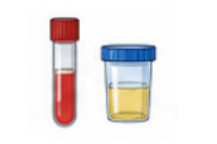
To select the appropriate biological sample for quantitative analysis.
Common Biological Matrices
- Plasma
- Serum
- Whole Blood
- Urine
- Saliva
- Tissue Homogenates
Selection Criteria
- Study objective
- Drug distribution
- Matrix complexity
- Sample availability
- Analytical sensitivity requirements
Importance
- Minimizes matrix interference.
- Improves analytical reliability.
- Supports pharmacokinetic studies.
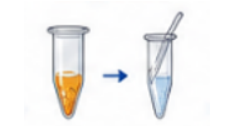
Purpose
To isolate the analyte from biological matrices while removing proteins, phospholipids, and endogenous interferences.
Common Sample Preparation Techniques
Protein Precipitation (PPT)
- Simple and rapid.
- Suitable for routine analysis.
Liquid–Liquid Extraction (LLE)
- Provides clean extracts.
- Improves sensitivity.
Solid Phase Extraction (SPE)
- High recovery.
- Excellent sample cleanup.
- Suitable for trace analysis.
Supported Liquid Extraction (SLE)
- Alternative to LLE.
- Improved reproducibility.
Importance
- Reduces matrix effects.
- Protects analytical instruments.
- Enhances accuracy and precision.
Purpose
To select an internal standard (IS) that compensates for analytical variability during extraction, chromatographic separation, and instrumental analysis, thereby improving accuracy, precision, and reliability.
Principle
The internal standard undergoes the same analytical process as the analyte. Any variation affecting the analyte similarly affects the internal standard, allowing correction through the analyte-to-internal standard response ratio.
Types of Internal Standards
Stable Isotope-Labelled Internal Standard (SIL-IS)
- Isotopically labelled version of the analyte (²H, ¹³C, or ¹⁵N).
- Same extraction behaviour, retention time, and ionization efficiency as the analyte.
- Distinguished by a different mass-to-charge ratio (m/z).
- Considered the gold standard for LC–MS/MS analysis.
Structural Analogue Internal Standard
- Chemical structure similar to the analyte but distinguishable during detection.
- Readily available and lower cost.
- May not fully compensate for matrix effects or ionization differences.
Stable Isotope-Labeled Metabolite
- Used when metabolite quantification is required.
- Not suitable for quantifying the parent drug.
Selection Criteria
- Chemically stable under analytical conditions.
- Physicochemical properties similar to the analyte.
- Similar extraction recovery and retention time close to the analyte.
- Similar ionization efficiency.
- Absent in blank biological matrices and does not interfere with analyte peaks.
- Produces a stable detector response and is available in high purity.
Best Practices
- Use a stable isotope-labelled internal standard whenever available.
- Add the internal standard before sample extraction.
- Verify absence from blank biological samples and use a constant concentration throughout the study.
- Maintain the same internal standard across all calibration standards, QC samples, and study samples.
- Do not use a metabolite or endogenous compound as the internal standard, and do not change it during an ongoing study.
Importance
- Corrects analytical variability and minimizes matrix effects.
- Improves accuracy, precision, and reproducibility.
- Supports compliance with FDA, EMA, and ICH bioanalytical guidelines.
Purpose
To optimize chromatographic separation prior to analyte detection.
Parameters Optimized
- Column selection (C18, Phenyl, etc.)
- Mobile phase composition
- Buffer selection
- pH
- Organic solvent
- Gradient program
- Flow rate
- Injection volume
- Run time
Importance
- Produces sharp chromatographic peaks.
- Improves resolution.
- Reduces analysis time.
- Minimizes matrix interference.
Purpose
To optimize mass spectrometric conditions for selective and sensitive analyte detection.
Parameters Optimized
- Ionization source (ESI/APCI)
- Positive or negative ion mode
- Precursor ion selection (Q1)
- Product ion selection (Q3)
- Collision energy
- Source parameters
- Multiple Reaction Monitoring (MRM) transitions
Importance
- High sensitivity.
- Excellent selectivity.
- Reliable quantification.
Purpose
To demonstrate that the developed bioanalytical method is reliable and suitable for routine analysis.
Validation Parameters
Selectivity
Ability to distinguish analyte from endogenous compounds.
Accuracy
Recovery should typically be within 85–115% of the nominal concentration.
Precision
- Intra-day Precision (%CV ≤15%)
- Inter-day Precision (%CV ≤15%)
- ≤20% at LLOQ
Linearity
Calibration curve should demonstrate excellent correlation across the analytical range.
Recovery
Evaluation of extraction efficiency.
Matrix Effect
Assessment of ion suppression or ion enhancement.
Carryover
Determination of analyte contamination between injections.
Stability
Evaluation under:
- Bench-top stability
- Freeze–thaw stability
- Long-term stability
- Autosampler stability
- Stock solution stability
Dilution Integrity
Verification that diluted samples remain accurate and precise.
Importance
- Confirms method reliability.
- Ensures compliance with FDA and EMA guidelines.
- Supports routine bioanalysis.
Purpose
To confirm reproducibility of results using actual study samples.
Procedure
A selected percentage of study samples is reanalyzed and compared with the original results.
Acceptance Criteria
- Generally ≥67% of ISR results should be within ±20% of the original value.
Importance
- Demonstrates method reproducibility.
- Confirms reliability of clinical study data.
Purpose
To evaluate drug absorption, distribution, metabolism, and elimination using validated analytical data.
Common Pharmacokinetic Parameters
- Cmax
- Tmax
- AUC
- Half-life (t½)
- Clearance (CL)
- Volume of Distribution (Vd)
Importance
- Supports dose optimization.
- Evaluates drug exposure.
- Assists clinical development.
Purpose
To compare the bioavailability of test and reference pharmaceutical products.
Acceptance Criteria
The 90% confidence interval for the geometric mean ratio of key pharmacokinetic parameters (typically AUC and Cmax) should fall within 80.00–125.00%.
Importance
- Supports approval of generic medicines.
- Demonstrates therapeutic equivalence.
- Meets regulatory requirements.
Purpose
To prepare complete analytical documentation for regulatory submission.
Documentation Includes
- Method development report
- Validation report
- Raw analytical data
- Calibration records
- Chromatograms
- Standard Operating Procedures (SOPs)
- Regulatory submission documents
Importance
- Ensures data integrity.
- Facilitates regulatory review.
- Supports laboratory audits.
Bioanalytical methods are commonly applied to:
- Plasma
- Serum
- Whole Blood
- Urine
- Saliva
- Tissue Samples
Common analytical techniques include:
- HPLC
- UPLC
- LC–MS/MS
- Multiple Reaction Monitoring (MRM)
- UV Spectrophotometry (for selected applications)