Collection, Processing, Drying, and Storage of Plant Material
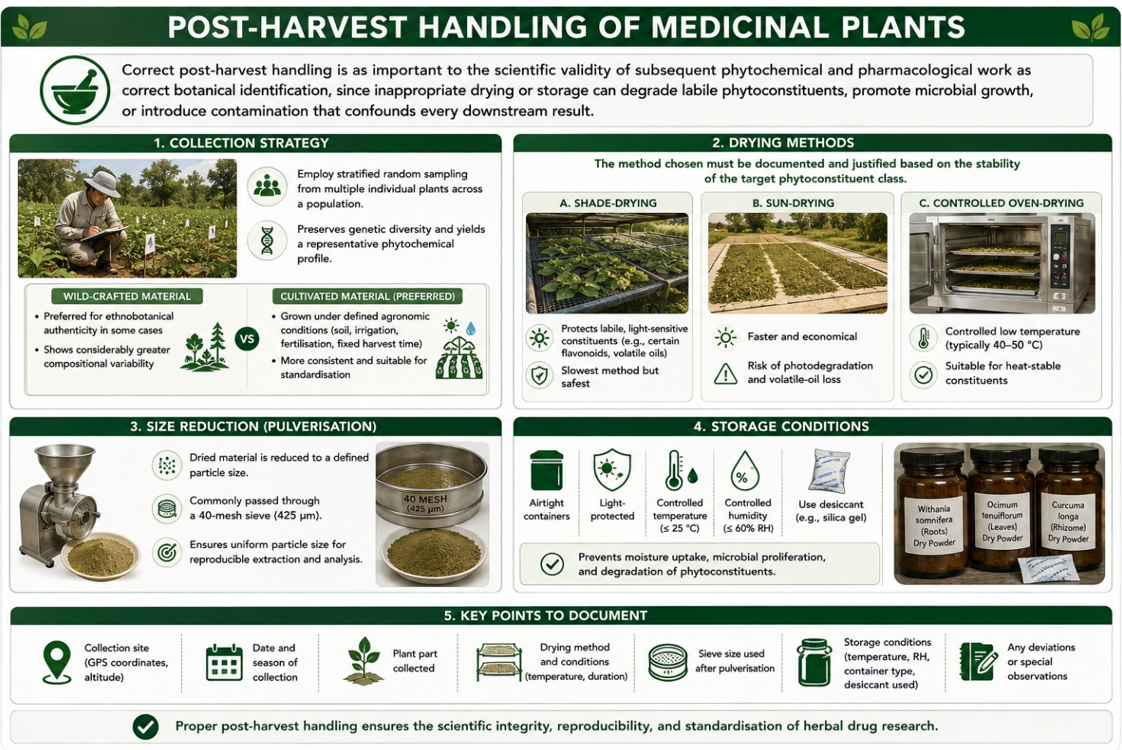
Correct post-harvest handling is as important to the scientific validity of subsequent phytochemical and pharmacological work as correct botanical identification, since inappropriate drying or storage can degrade labile phytoconstituents, promote microbial growth, or introduce contamination that confounds every downstream result. Collection should employ stratified random sampling from multiple individual plants across a population, rather than a single specimen, in order to preserve genetic diversity and yield a representative phytochemical profile; wild-crafted material, though sometimes preferred for ethnobotanical authenticity, shows considerably greater compositional variability than cultivated material grown under defined agronomic conditions (controlled soil, irrigation, fertilisation, and a fixed harvest time), and cultivated sourcing is therefore generally preferred wherever consistent standardisation is the primary research objective.
Drying is conventionally performed by shade-drying (protecting labile, light-sensitive constituents such as certain flavonoids and volatile oils), sun-drying (faster but risking photodegradation and volatile-oil loss), or controlled oven-drying at a defined low temperature, and the chosen method must be documented and justified against the stability of the target phytoconstituent class. Dried material is then reduced to a defined particle size (commonly to pass a 40-mesh sieve) and stored in airtight, light-protected containers under controlled temperature and humidity, ideally with desiccant, to prevent moisture uptake, microbial proliferation, and constituent degradation during the period between collection and analysis.