
Conventional Extraction Methods
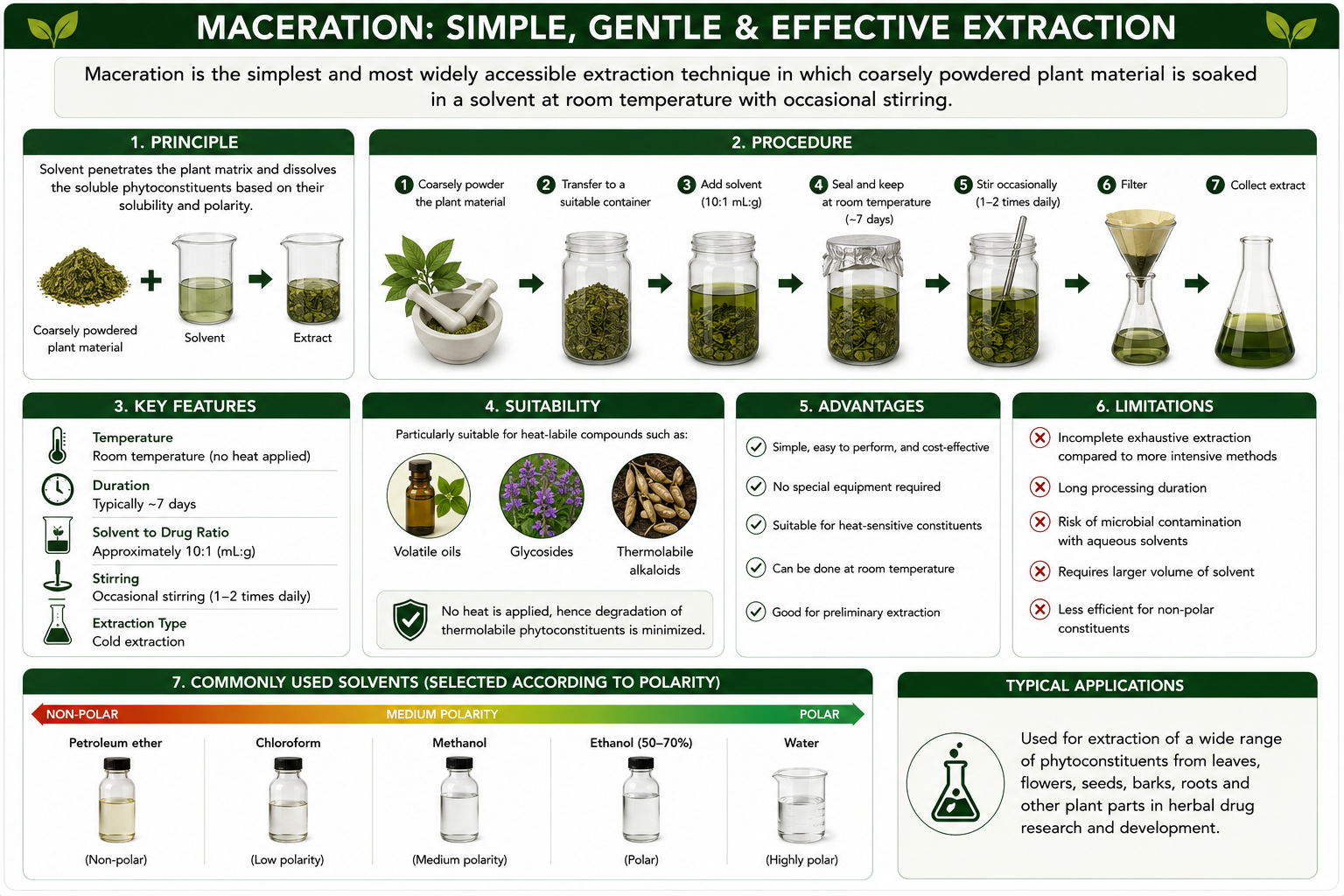
Maceration is the simplest and most widely accessible extraction technique, in which coarsely powdered plant material is soaked in a solvent at room temperature, typically for around seven days with occasional stirring, at a conventional solvent-to-drug ratio of approximately 10:1 (mL:g). Because no heat is applied, maceration is particularly well suited to heat-labile compounds such as volatile oils, glycosides, and thermolabile alkaloids that would degrade under the elevated temperatures of continuous hot extraction. Its principal limitations are incomplete exhaustive extraction relative to more intensive methods, a comparatively long processing duration, and, where an aqueous solvent is used, a risk of microbial contamination during the extended soaking period; common solvents include water, aqueous ethanol (typically 50–70%), methanol, chloroform, and petroleum ether, selected according to the polarity of the target constituent class.
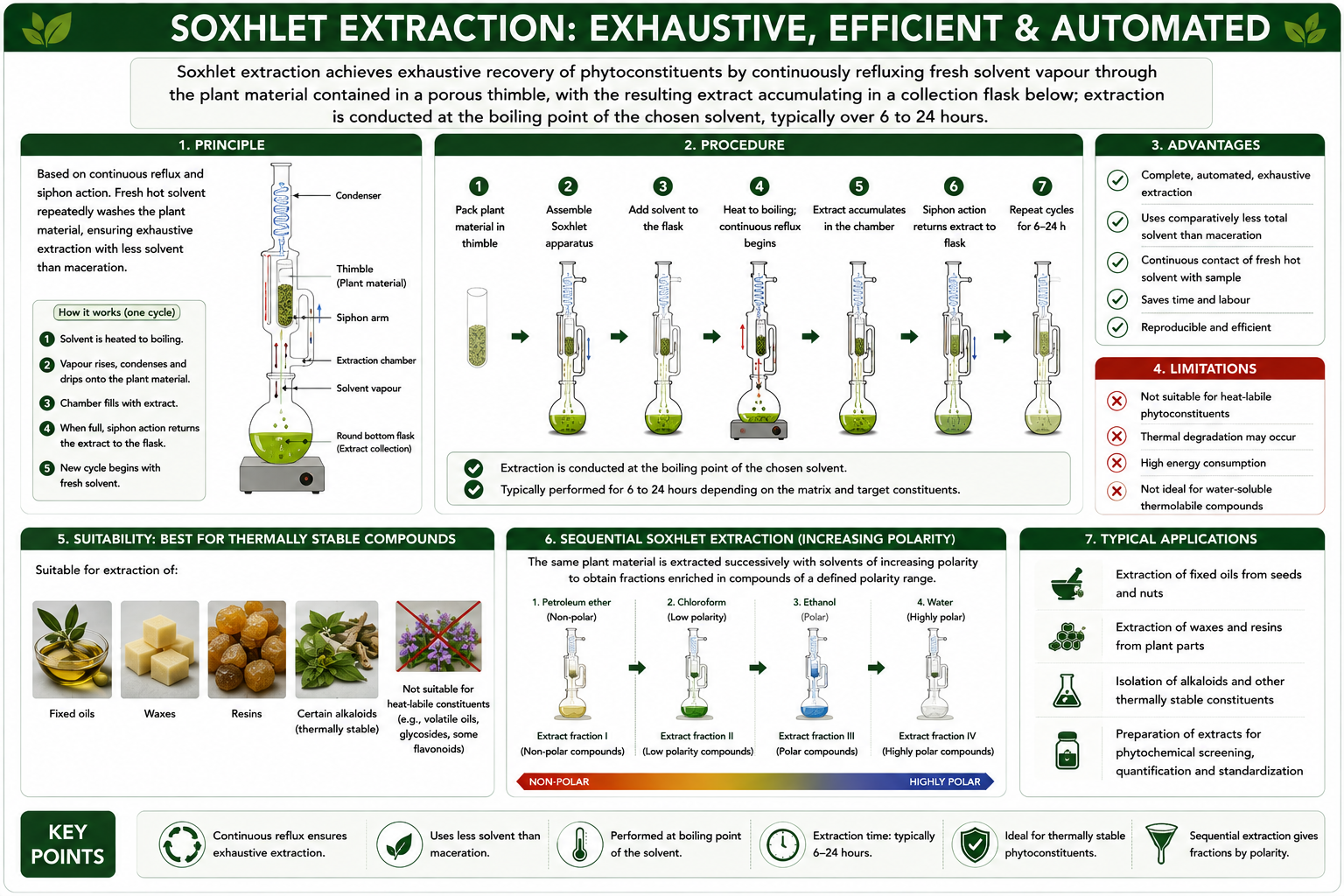
Soxhlet extraction achieves exhaustive recovery of phytoconstituents by continuously refluxing fresh solvent vapour through the plant material contained in a porous thimble, with the resulting extract accumulating in a collection flask below; extraction is conducted at the boiling point of the chosen solvent, typically over six to twenty-four hours. The technique offers the considerable advantage of complete, automated, exhaustive extraction using comparatively less total solvent than maceration, but its reliance on sustained heating renders it unsuitable for heat-labile phytoconstituents, and its use is generally reserved for thermally stable compound classes such as fixed oils, waxes, resins, and certain alkaloids. A frequently employed variant is sequential Soxhlet extraction, in which the same plant material is extracted successively with solvents of increasing polarity — typically petroleum ether, followed by chloroform, ethanol, and finally water — yielding a set of fractions each enriched in compounds of a defined polarity range.
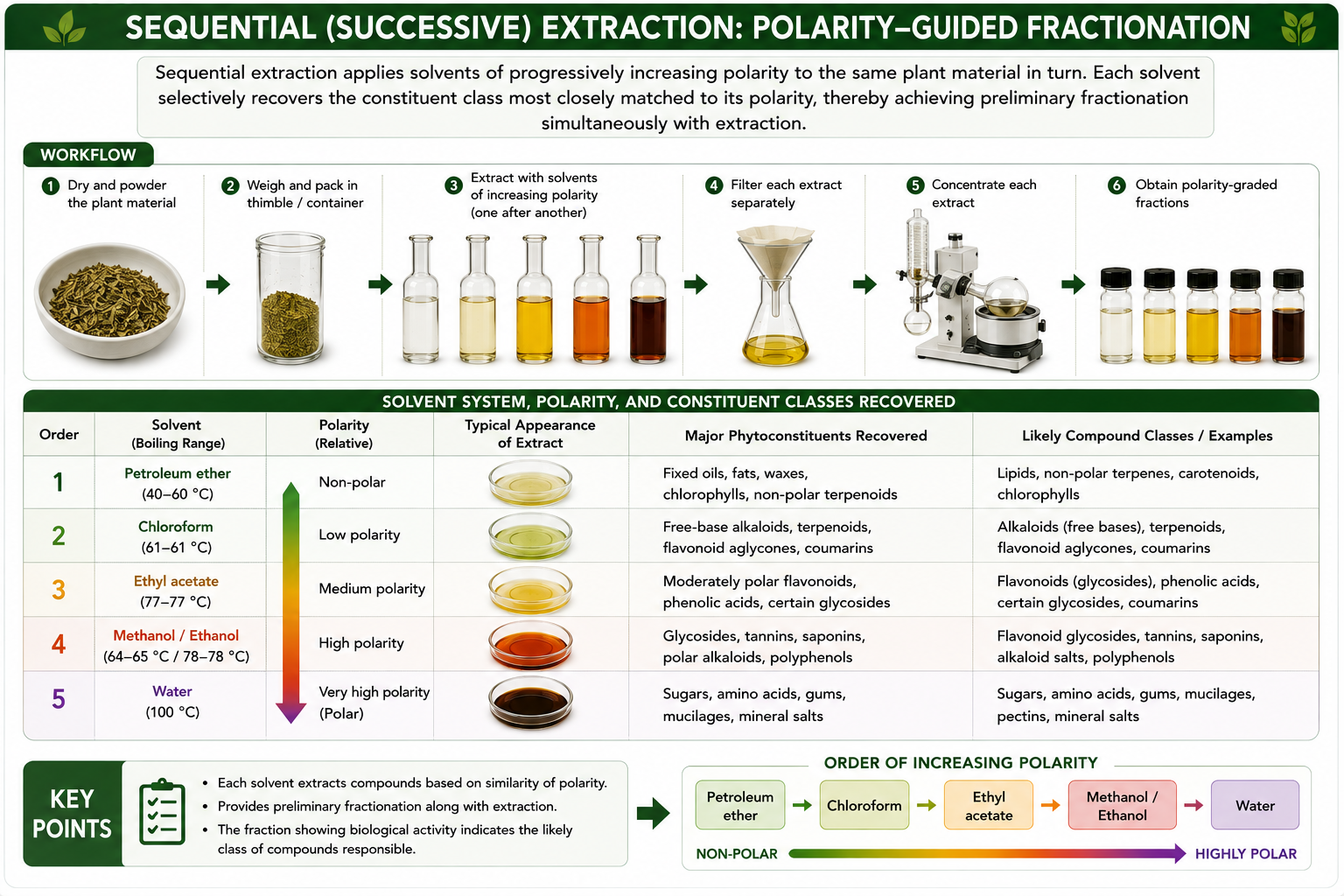
Sequential (or successive) extraction applies solvents of progressively increasing polarity to the same plant material in turn, on the rationale that each solvent will selectively recover the constituent class most closely matched to its own polarity, thereby achieving a form of preliminary fractionation simultaneously with extraction itself. The petroleum ether fraction (boiling range 40–60°C) typically contains fixed oils, fats, waxes, chlorophylls, and non-polar terpenoids; the chloroform fraction recovers free-base alkaloids, terpenoids, flavonoid aglycones, and coumarins; the ethyl acetate fraction recovers moderately polar flavonoids, phenolic acids, and certain glycosides; the methanol or ethanol fraction recovers glycosides, tannins, saponins, polar alkaloids, and polyphenols; and the final aqueous fraction contains sugars, amino acids, gums, mucilages, and mineral salts. This polarity-graded approach is widely used in preliminary phytochemical screening precisely because the fraction in which a given biological activity concentrates provides an immediate indication of the likely chemical class responsible.