
Greenness Assessment Tools
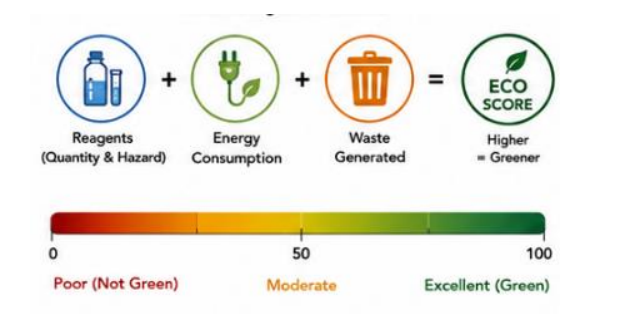
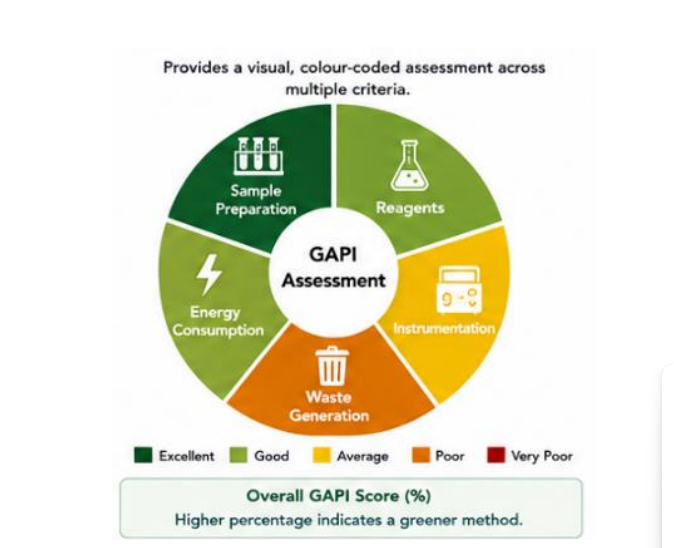
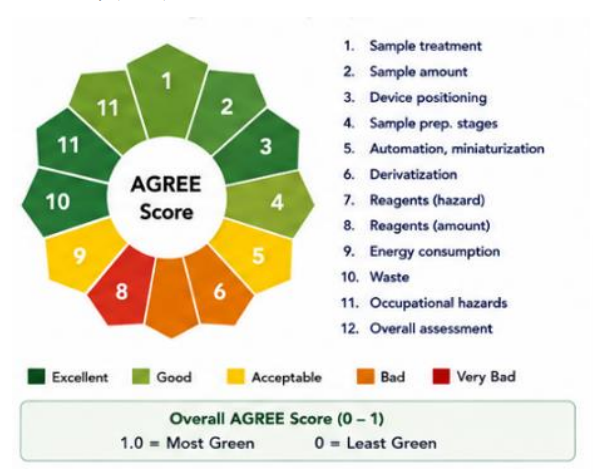
Several standardised tools have been developed to provide an objective, quantitative assessment of the environmental impact of an analytical method, enabling comparison between alternative procedures during method development and selection. The Analytical Eco-Scale assigns penalty points according to the quantity and hazard classification of reagents used, the energy consumption of the technique, and the nature of waste generated, with a higher final score indicating a greener method. The Green Analytical Procedure Index and the more recently developed Analytical Greenness metric provide visual, colour-coded assessments across multiple criteria encompassing sample preparation, reagents, instrumentation, and waste generation, allowing analysts to identify specific aspects of a method that could be modified to improve its overall environmental profile. Incorporation of such greenness assessment alongside traditional validation parameters is increasingly expected by pharmaceutical quality organisations committed to sustainable operations.
Purpose
Evaluates the environmental impact of an analytical method by assigning penalty points.
Parameters Considered
- Reagent type and hazard
- Reagent quantity
- Energy consumption
- Waste generation
- Occupational hazards
Scoring
- >75: Excellent Green Method
- 50–75: Acceptable Green Method
- <50: Not Green
Advantages
- Simple and easy to calculate
- Quantitative assessment
- Useful for comparing analytical methods
Purpose
Provides a visual assessment of the greenness of the entire analytical procedure.
Stages Evaluated
- Sample preparation
- Reagents
- Instrumentation
- Energy consumption
- Waste generation
Color Coding
- Green = Excellent
- Yellow = Good/Average
- Orange = Poor
- Red = Very Poor
Advantages
- Evaluates the complete analytical workflow
- Easy visual interpretation
- Identifies environmentally critical steps
Purpose
Comprehensively evaluates analytical methods based on the 12 Principles of Green Analytical Chemistry (GAC).
Parameters Evaluated
- Sample treatment
- Sample amount
- Device positioning
- Sample preparation
- Automation and miniaturization
- Derivatization
- Reagent hazard
- Reagent amount
- Energy consumption
- Waste generation
- Occupational hazards
- Overall assessment
Score Range
- 1.0 = Most Green
- 0 = Least Green
Advantages
- Most comprehensive green metric
- Standardized scoring system
- Allows direct comparison between analytical methods
The pharmaceutical industry is increasingly integrating green analytical chemistry principles into quality by design frameworks, evaluating environmental impact alongside traditional criteria of accuracy, precision, and robustness during method selection, while continued advances in miniaturised and solvent-free analytical platforms, including portable spectroscopic devices, are expected to further reduce the environmental footprint of routine pharmaceutical quality control without compromising analytical reliability.
Recent Advances Highlighted
- Integration with Quality by Design (QbD) for environmentally conscious method development.
- Miniaturized and solvent-free analytical techniques to reduce solvent consumption.
- Portable analytical instruments for on-site analysis with minimal resource use.
- Sustainable analytical practices that reduce environmental impact while maintaining analytical performance.