
High Performance Thin Layer Chromatography (HPTLC)
High Performance Thin Layer Chromatography is an advanced planar chromatographic technique that employs pre-coated silica gel plates of narrow particle size distribution, typically between five and seven micrometres, to achieve separation efficiencies approaching those of column chromatography while retaining the simplicity and low cost characteristic of classical thin layer chromatography. A distinguishing advantage of HPTLC is its capacity to analyse multiple samples simultaneously on a single plate, which confers considerable throughput advantages for screening and fingerprinting applications.
In HPTLC, samples are applied as narrow bands near the base of the plate using automated applicators that ensure precise and reproducible volume delivery. The plate is then developed in a saturated chamber, during which the mobile phase ascends the stationary phase by capillary action, carrying the sample components at differential rates determined by their relative affinities for the stationary and mobile phases. Following development, the plate is dried and the separated zones are visualised, either by their intrinsic ultraviolet absorbance or fluorescence, or after derivatisation with a chromogenic reagent, and quantified using a densitometric scanner. HPTLC is recognised as an official technique in several pharmacopoeias, including the Indian Pharmacopoeia, the United States Pharmacopeia, and the European Pharmacopoeia, and finds application in herbal fingerprinting, identity testing, and content uniformity assessment of botanical and conventional pharmaceutical products.
Objective
To develop a robust, reliable, and reproducible High-Performance Thin Layer Chromatography (HPTLC) method by systematically optimizing each analytical parameter, from stationary phase selection to densitometric quantification.
Purpose
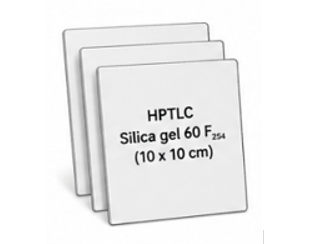
The stationary phase acts as the adsorbent where separation of analytes occurs. Proper selection of the HPTLC plate is essential for achieving good resolution, reproducibility, and accurate analysis.
Commonly Used Stationary Phase
- Silica Gel 60 F254
Available Plate Sizes
- 10 × 10 cm
- 10 × 20 cm
- 20 × 10 cm
Importance
- Provides efficient separation.
- Produces sharp and symmetrical spots.
- Improves reproducibility between analyses.
Purpose
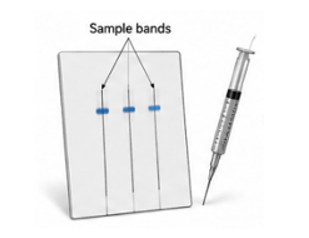
Sample application must be carefully optimized to obtain consistent spot size, proper resolution, and accurate quantitative analysis.
Important Parameters
- Band Width
- Sample Application Volume
- Distance from Bottom (Application Position)
Typical Conditions
- Band Width: 4–8 mm
- Application Volume: 1–10 μL
- Distance from Bottom: 8–12 mm
Importance
- Prevents spot diffusion.
- Improves separation efficiency.
- Enhances reproducibility.
Purpose
The mobile phase is optimized through systematic trial-and-error to achieve effective separation of analytes based on polarity differences.
Principle
The composition of solvents is selected according to the polarity of the analyte and stationary phase.
Solvent Polarity Triangle
The mobile phase generally consists of:
- Non-polar solvent
- Medium polarity solvent
- Polar solvent
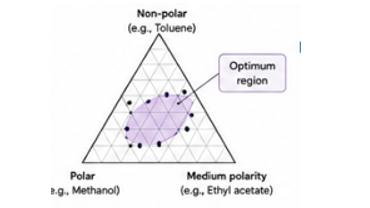
The ratio of solvents is adjusted until acceptable chromatographic performance is achieved.
Target Retardation Factor (Rf)
- Rf Range: 0.2–0.8
Key Considerations
- Evaluate multiple solvent combinations.
- Modify solvent ratios gradually.
- Select the composition providing acceptable Rf values and well-resolved spots.
Purpose
After chromatographic development, separated compounds must be visualized for qualitative and quantitative evaluation.
Detection Methods
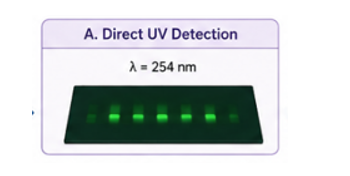
A. Direct UV Scanning
Suitable when compounds absorb UV radiation.
Common Wavelengths
- 254 nm
- 366 nm
B. Visualisation Reagents
Used when analytes are not UV active.
Typical Process
- Dip the plate in reagent.
- Spray the reagent.
- Heat if necessary.
- Develop coloured spots for observation.
Importance
Detection conditions should produce clear, stable, and reproducible spots.
Purpose
Densitometric scanning converts chromatographic spots into measurable peaks for quantitative analysis.
Principle
The scanner measures the intensity of each spot and generates a densitogram similar to an HPLC chromatogram.
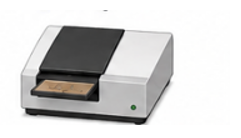
Output
- Peak Area
- Peak Height
- Retardation Factor (Rf)
- Quantitative Results
Importance
Provides accurate, precise, and reproducible quantitative data.
A successful HPTLC method depends on optimization of the following parameters:
- Proper stationary phase selection
- Optimized sample application
- Suitable mobile phase composition
- Appropriate detection conditions
- Accurate densitometric scanning
A well-developed HPTLC method offers several analytical advantages:
- Ensures good resolution and selectivity.
- Produces accurate, precise, and reproducible results.
- Meets regulatory requirements (ICH, USP, BP, IP).
- Suitable for qualitative and quantitative pharmaceutical analysis.
- Supports routine quality control and research applications.
Development of a robust HPTLC method requires careful selection of the stationary phase and plate format, followed by optimisation of sample application parameters such as band width and application volume to ensure resolution and reproducibility. The mobile phase system is then optimised through systematic trial development, typically guided by solvent polarity triangles, to achieve adequate separation of the analyte from matrix components within an acceptable retardation factor range. Detection conditions are subsequently established, whether by direct ultraviolet scanning or through selection of an appropriate visualisation reagent, and the method is finalised through densitometric scanning that converts the separated zones into quantifiable peak data analogous to a chromatogram.
Objective
To develop a robust, accurate, and reproducible High-Performance Thin Layer Chromatography (HPTLC) method by systematically optimizing each stage of the analytical process, from stationary phase selection to quantitative analysis using densitometric scanning.
Purpose
The first step in HPTLC method development is selecting an appropriate stationary phase and plate format based on the physicochemical properties of the analyte and the analytical objective.
Principle
The stationary phase acts as the adsorbent where separation occurs. Proper selection provides effective interaction between the analyte and the silica surface, resulting in good separation efficiency.
Commonly Used Stationary Phase
- Silica Gel 60 F254
Plate Sizes
- 10 × 10 cm
- 10 × 20 cm
- 20 × 10 cm
Importance
- Produces sharp chromatographic spots.
- Improves separation efficiency.
- Provides high reproducibility.
- Forms the foundation of a robust HPTLC method.
Purpose
To apply the sample uniformly on the HPTLC plate for consistent migration and reproducible chromatographic results.
Principle
Optimizing sample application minimizes spot diffusion and ensures equal solvent migration across all sample tracks.
Critical Parameters
- Band Width
- Sample Application Volume
- Distance from Bottom (Application Position)
Recommended Conditions
- Band Width: 4–8 mm
- Application Volume: 1–10 µL
- Distance from Bottom: 8–12 mm
Importance
- Produces compact spots.
- Prevents band broadening.
- Enhances resolution.
- Improves quantitative accuracy.
Purpose
To determine the most suitable solvent composition for efficient separation of analytes.
Principle
The mobile phase is optimized by changing solvent composition according to analyte polarity until acceptable chromatographic separation is obtained.
Solvent Selection
The mobile phase generally contains:
- Non-polar solvent
- Medium polarity solvent
- Polar solvent
The solvent ratio is adjusted systematically using polarity principles.
Target Rf Value
- 0.20–0.80
Optimisation Strategy
- Prepare different solvent combinations.
- Evaluate chromatographic separation.
- Modify solvent ratios.
- Select the composition producing sharp, well-resolved spots with acceptable Rf values.
Importance
- Improves selectivity.
- Enhances resolution.
- Produces symmetrical spots.
- Reduces interference from impurities.
Purpose
To visualize separated analytes after chromatographic development.
Principle
Separated compounds are detected either directly under ultraviolet light or by using suitable visualization reagents depending on their chemical properties.
A. Direct UV Detection
Used for compounds that absorb ultraviolet light.
Typical Wavelengths
- 254 nm
- 366 nm
B. Visualisation Reagents
Used for compounds that are not UV active.
Methods include:
- Spraying
- Dipping
- Derivatization
- Heating (when required)
Importance
- Produces clear chromatographic spots.
- Improves sensitivity.
- Enables qualitative identification.
- Supports quantitative analysis.
Purpose
To convert chromatographic spots into quantitative analytical data.
Principle
The densitometric scanner measures the intensity of each separated spot and converts it into a chromatographic peak (densitogram). Peak area is proportional to analyte concentration.
Output
- Densitogram
- Peak Area
- Peak Height
- Rf Value
- Quantitative Concentration
Importance
- Provides accurate quantification.
- Ensures high precision.
- Produces reproducible analytical results.
- Supports method validation.
A reliable HPTLC method depends on optimization of the following parameters:
- Appropriate stationary phase selection
- Optimized sample application
- Suitable mobile phase composition
- Correct detection conditions
- Accurate densitometric scanning
A systematically developed HPTLC method offers several analytical advantages:
Good Resolution and Selectivity
Proper optimization ensures efficient separation of analytes from impurities and degradation products.
Accurate and Reproducible Results
Optimized experimental conditions provide precise quantitative data with minimal variation.
Regulatory Compliance
A validated HPTLC method fulfills the requirements of regulatory guidelines such as:
- ICH
- USP
- BP
- IP
Chamber saturation, humidity control, and plate activation are critical practical variables in HPTLC because variability in these conditions can significantly alter retardation factor values and compromise inter-day reproducibility, making environmental control an essential component of method robustness.
Objective
To optimize environmental and operational conditions during HPTLC analysis to achieve accurate, reproducible, and robust chromatographic results.
Introduction
Apart from selecting the stationary phase and mobile phase, several practical parameters significantly influence HPTLC performance. Chamber saturation, humidity control, and plate activation affect solvent migration, analyte separation, spot quality, and reproducibility. Proper control of these parameters ensures reliable analytical results and method robustness.
Purpose
Chamber saturation establishes equilibrium between the mobile phase vapour and the development chamber before chromatographic development.
Principle
Saturating the chamber minimizes solvent evaporation during development, resulting in uniform solvent migration and consistent Retardation Factor (Rf) values.
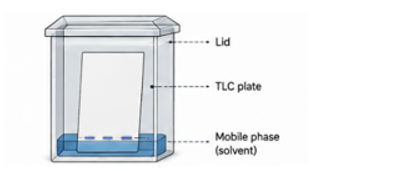
Recommended Conditions
- Saturation Time: 20–30 minutes
- Chamber lined with filter paper
- Chamber lid tightly closed
- Mobile phase added before saturation
Advantages
- Uniform solvent front movement.
- Improved spot resolution.
- Consistent Rf values.
- Better reproducibility.
- Reduced edge effects.
Effect of Improper Saturation
- High or low Rf values.
- Poor spot resolution.
- Spot tailing.
- Irregular solvent migration.
- Reduced method reproducibility.
Purpose
To maintain an optimum humidity level during chromatographic development for consistent analyte migration and spot formation.
Principle
Atmospheric humidity influences adsorption of analytes onto the stationary phase and affects solvent movement across the HPTLC plate.
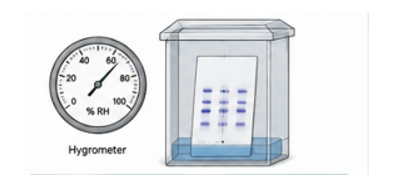
Recommended Conditions
- Relative Humidity (RH): 45–60%
- Laboratory Temperature: 20–25°C
Importance
- Produces sharp and compact spots.
- Maintains reproducible Rf values.
- Improves chromatographic consistency.
- Reduces environmental variation.
Effect of Improper Humidity
- Diffused spots.
- Streaking and tailing.
- Irreproducible Rf values.
- Poor separation efficiency.
Purpose
To remove adsorbed moisture and impurities from the silica gel surface before sample application.
Principle
Heating the HPTLC plate activates the stationary phase, providing uniform adsorption sites for analyte separation.
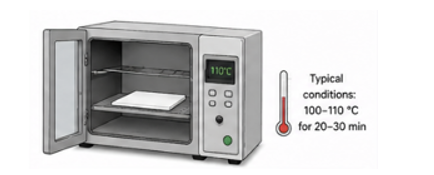
Recommended Conditions
- Temperature: 100–110°C
- Heating Time: 20–30 minutes
- Cool the plate in a desiccator before use.
Advantages
- Removes moisture from the plate.
- Improves adsorption efficiency.
- Produces better peak shape.
- Enhances reproducibility.
Precautions
- Avoid prolonged exposure to atmospheric moisture after activation.
- Store activated plates in a desiccator until use.
Effect of Improper Plate Activation
- Variable analyte adsorption.
- Poor peak shape.
- Reduced resolution.
- Poor inter-day reproducibility.
Impact on Method Robustness
Proper control of chamber saturation, humidity, and plate activation directly affects the quality of chromatographic separation. Optimizing these parameters results in:
- Consistent Rf values.
- Improved spot shape.
- Higher resolution.
- Accurate and precise analysis.
- Better repeatability and reproducibility.
- Robust and validated HPTLC methods.
HPTLC methods used for pharmacopoeial identity testing and herbal fingerprinting must comply with the general chapters on thin layer chromatography described in the applicable pharmacopoeia, and validation follows the same general principles articulated in International Council for Harmonisation Q2(R2).