
Modern and Green Extraction Technologies
Modern extraction technologies have been developed principally to address the speed, solvent-consumption, and thermal-degradation limitations of conventional methods, and are increasingly favoured both for research efficiency and for their alignment with green chemistry principles.
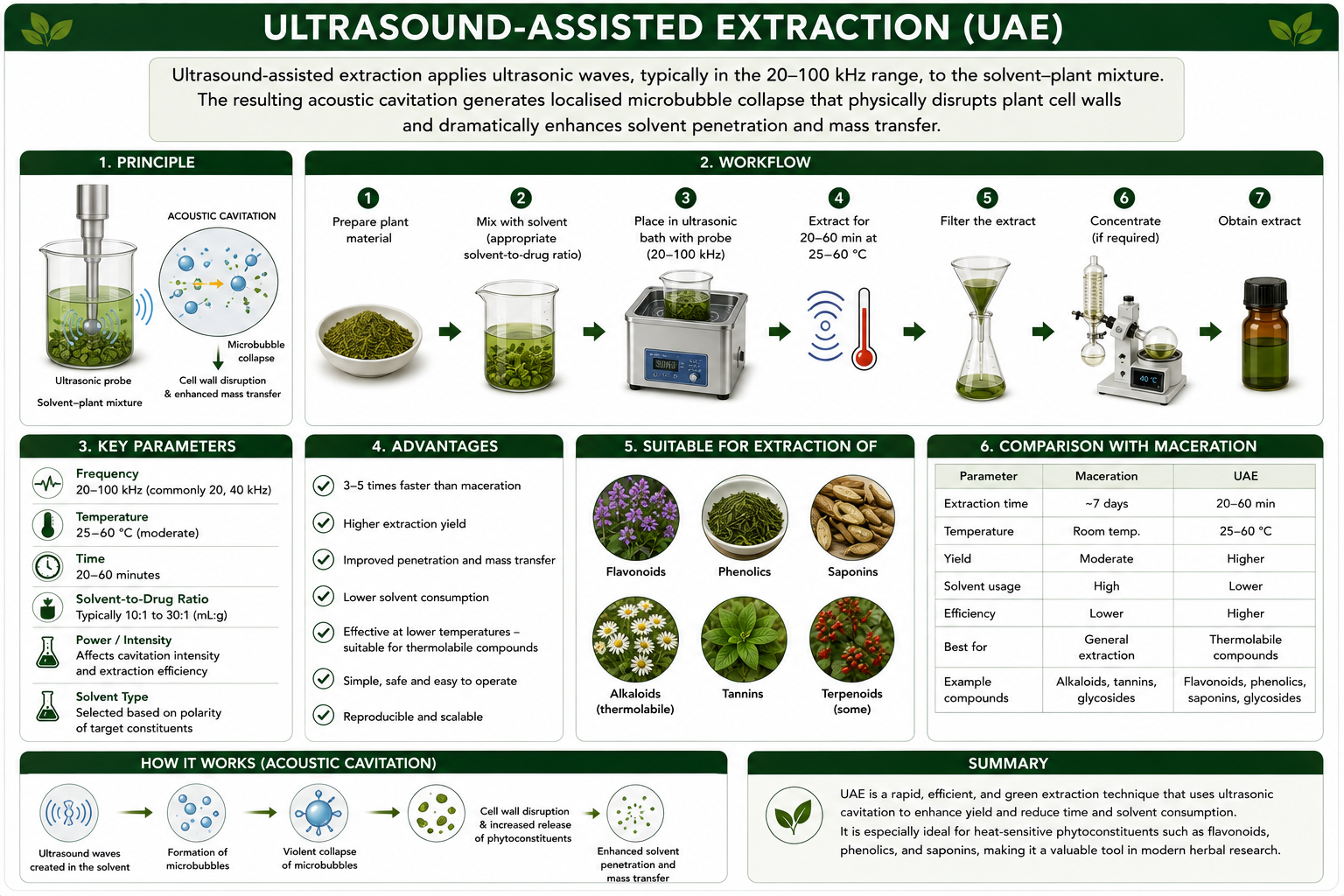
Ultrasound-assisted extraction applies ultrasonic waves, typically in the 20–100 kHz range, to the solvent-plant mixture; the resulting acoustic cavitation generates localised microbubble collapse that physically disrupts plant cell walls and dramatically enhances solvent penetration and mass transfer. UAE typically achieves extraction in 20–60 minutes at moderate temperatures of 25–60°C, offering three- to five-fold faster processing than maceration with generally improved yield, and is particularly well suited to thermolabile flavonoids, phenolics, and saponins.
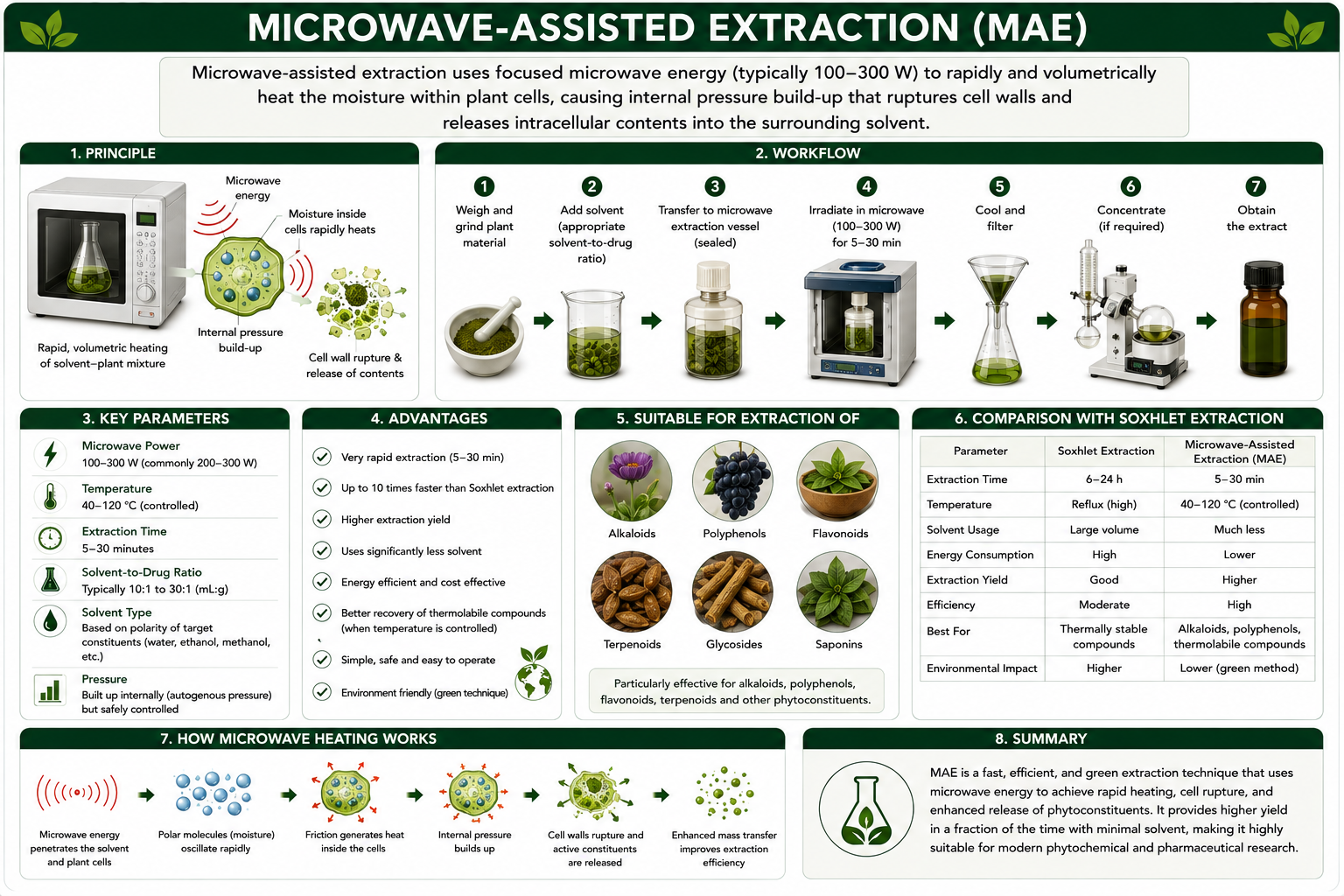
Microwave-assisted extraction uses focused microwave energy (typically 100–300 W) to rapidly and volumetrically heat the moisture within plant cells, causing internal pressure build-up that ruptures cell walls and releases intracellular contents into the surrounding solvent; extraction is typically complete within 5–30 minutes, up to ten times faster than conventional Soxhlet extraction, using considerably less solvent, and is well suited to alkaloids and polyphenols.
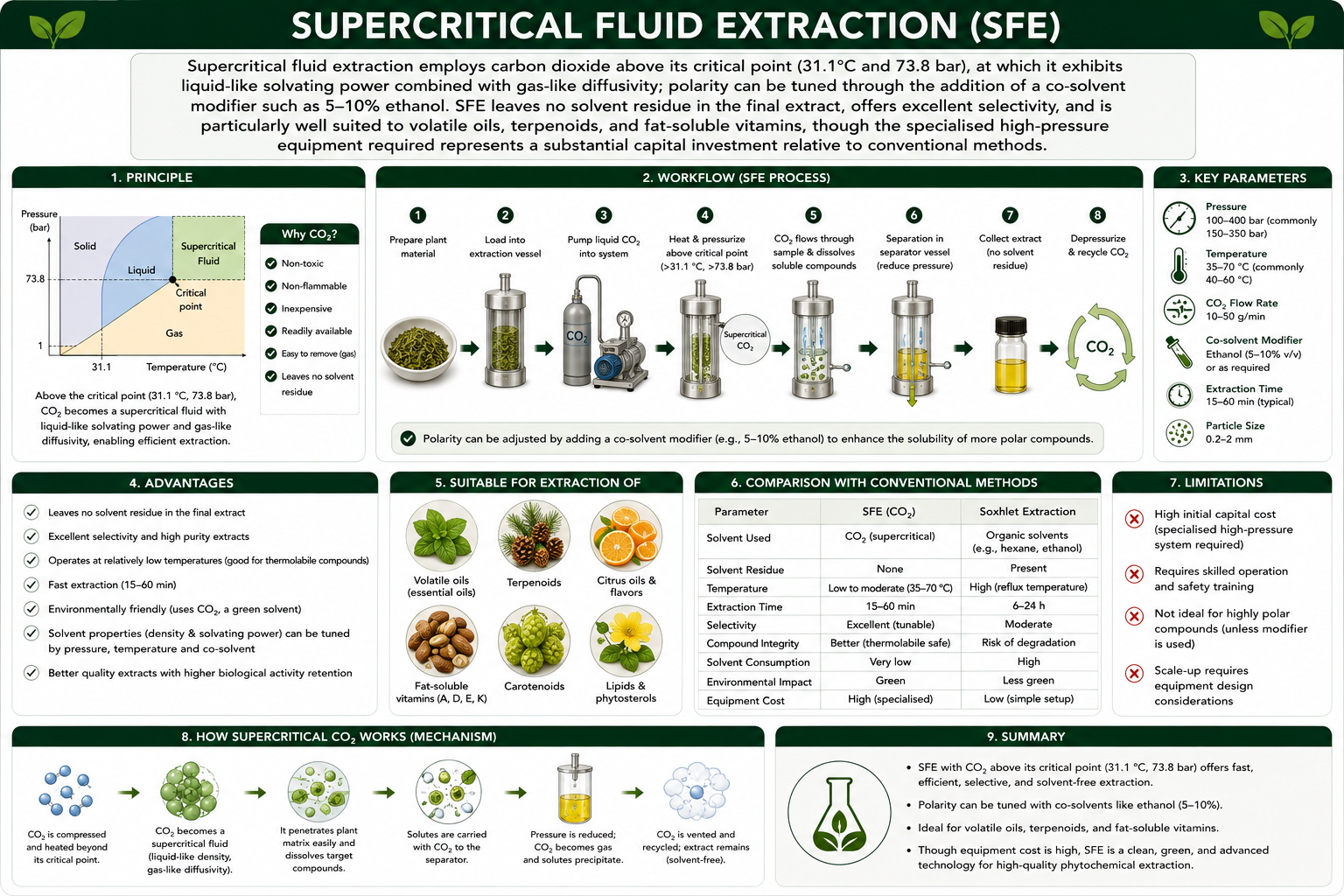
Supercritical fluid extraction employs carbon dioxide above its critical point (31.1°C and 73.8 bar), at which it exhibits liquid-like solvating power combined with gas-like diffusivity; polarity can be tuned through the addition of a co-solvent modifier such as 5–10% ethanol. SFE leaves no solvent residue in the final extract, offers excellent selectivity, and is particularly well suited to volatile oils, terpenoids, and fat-soluble vitamins, though the specialised high-pressure equipment required represents a substantial capital investment relative to conventional methods.
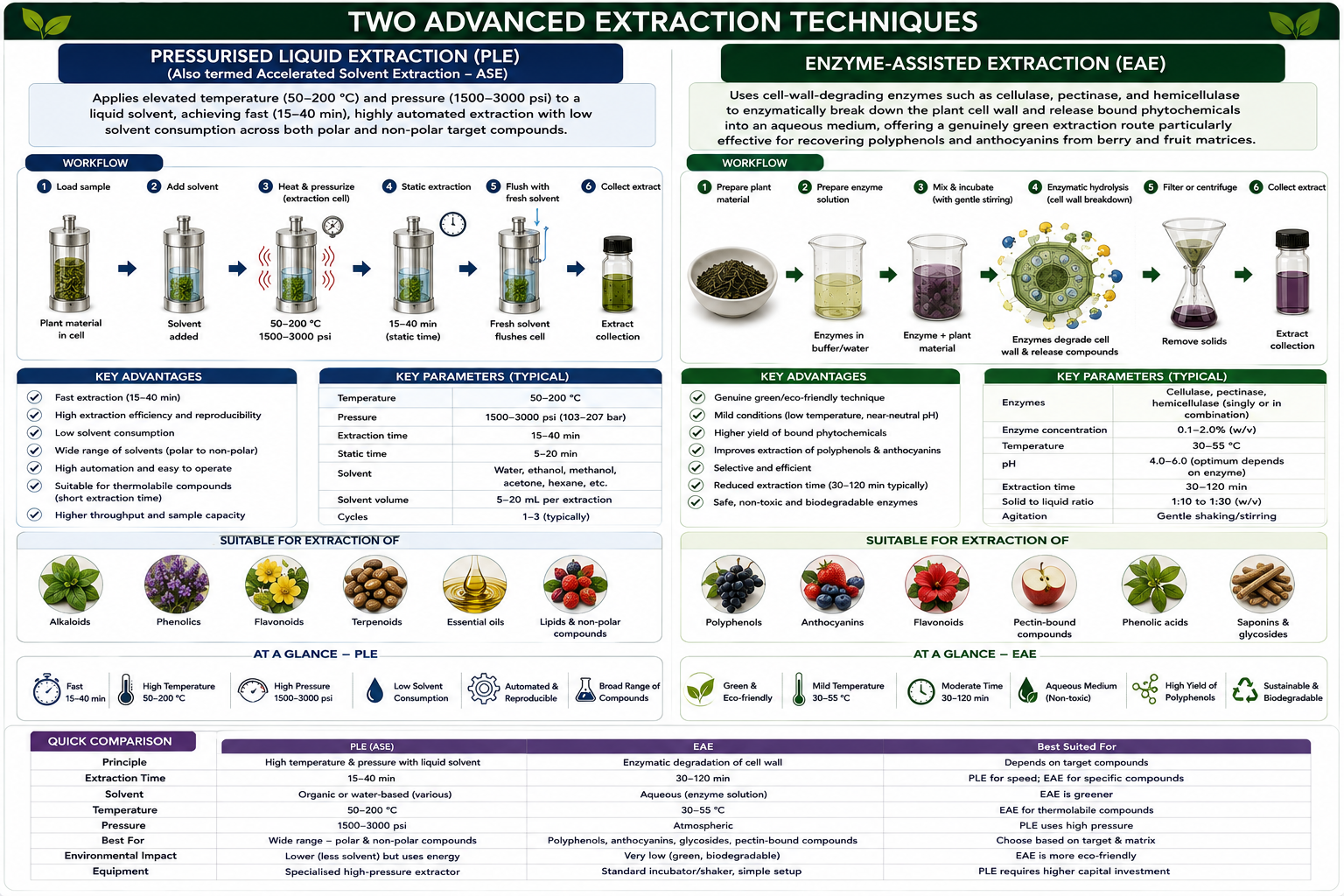
Pressurised liquid extraction, also termed accelerated solvent extraction, applies elevated temperature (50–200°C) and pressure (1500–3000 psi) to a liquid solvent, achieving fast (15–40 minute), highly automated extraction with low solvent consumption across both polar and non-polar target compounds. Enzyme-assisted extraction instead uses cell-wall-degrading enzymes such as cellulase, pectinase, and hemicellulase to enzymatically break down the plant cell wall and release bound phytochemicals into an aqueous medium, offering a genuinely green extraction route particularly effective for recovering polyphenols and anthocyanins from berry and fruit matrices.