
Solvent Selection in Herbal Extraction
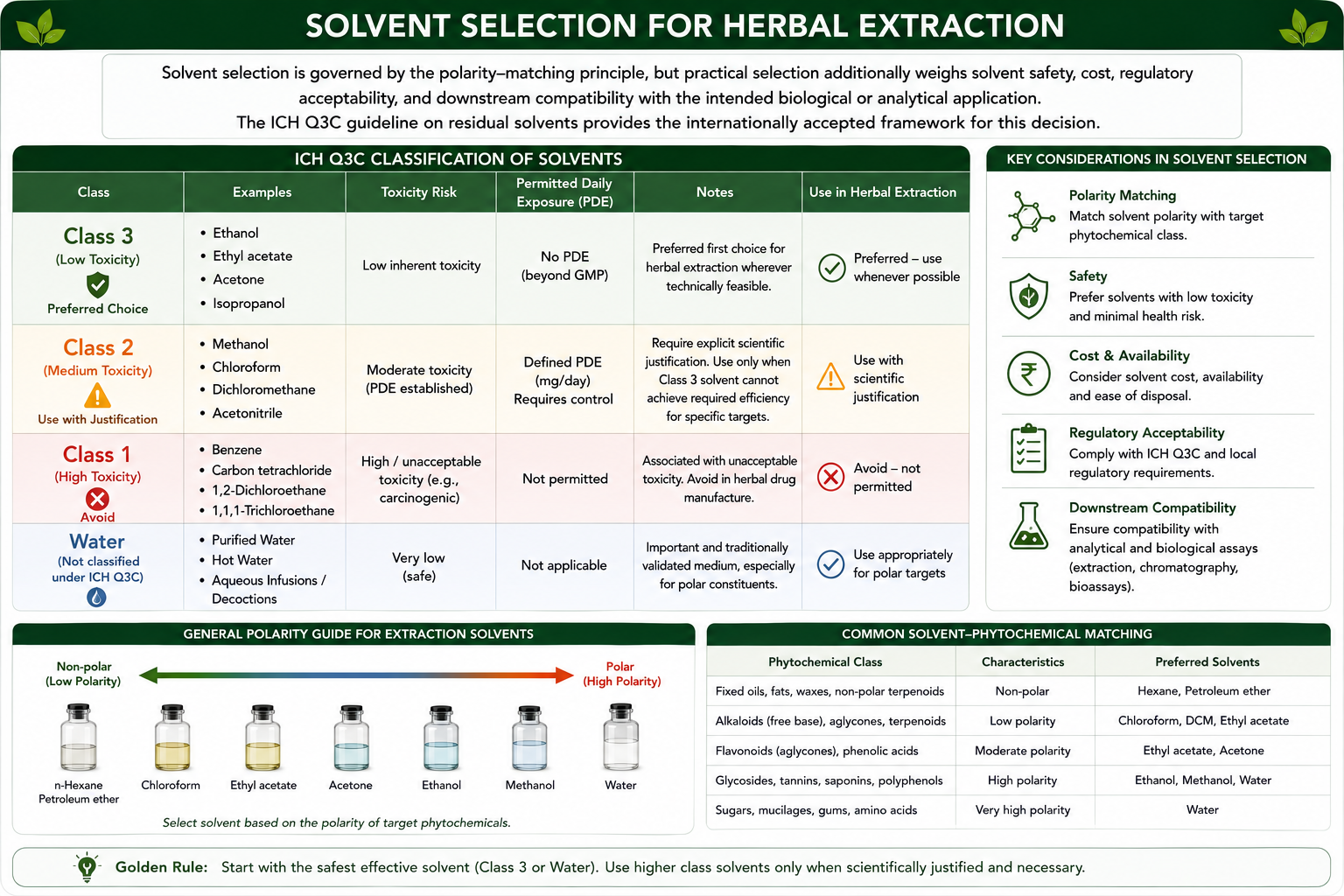
Solvent selection is governed by the polarity-matching principle, but practical selection additionally weighs solvent safety, cost, regulatory acceptability, and downstream compatibility with the intended biological or analytical application. The International Council for Harmonisation's Q3C guideline on residual solvents provides the internationally accepted framework for this decision: Class 3 solvents, including ethanol, ethyl acetate, acetone, and isopropanol, carry low inherent toxicity and no exposure limit beyond general good manufacturing practice, and are therefore the preferred first choice for herbal extraction wherever technically feasible. Class 2 solvents, including methanol and chloroform, carry defined permitted daily exposure limits and require explicit scientific justification for their continued use, typically reserved for cases where a Class 3 solvent cannot achieve the required extraction efficiency for a specific target compound class. Class 1 solvents, associated with unacceptable toxicity such as carcinogenicity, are avoided in herbal drug manufacture altogether. Water, though not formally classified under ICH Q3C, remains an important and traditionally validated extraction medium, particularly for polar glycosides, tannins, and mucilages.