
Yield Optimisation and Extract Characterisation
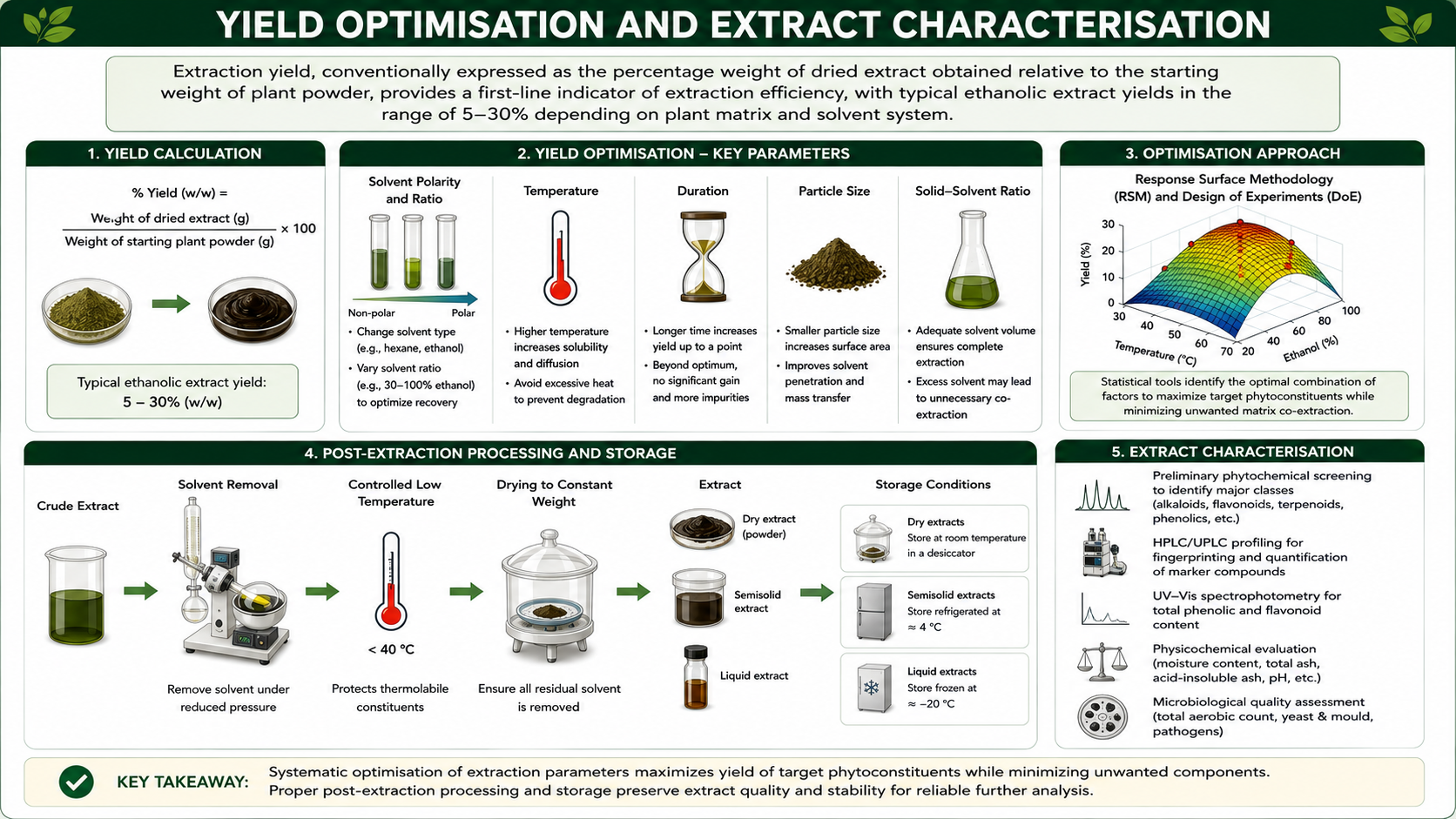
Extraction yield, conventionally expressed as the percentage weight of dried extract obtained relative to the starting weight of plant powder, provides a first-line indicator of extraction efficiency, with typical ethanolic extract yields in the range of 5–30% depending on plant matrix and solvent system. Yield optimisation involves the systematic variation of extraction parameters — solvent polarity and ratio, temperature, duration, and particle size of the starting material — to maximise recovery of the target phytoconstituent class without a proportionate increase in co-extracted, undesirable matrix components; response surface methodology and other statistical design-of-experiments approaches are increasingly used to identify optimal parameter combinations efficiently.
Following extraction, the solvent is removed under reduced pressure at a controlled low temperature (conventionally below 40°C, to protect thermolabile constituents) using a rotary evaporator, and the resulting extract is dried to constant weight, with dry extracts stored at room temperature in a desiccator, semisolid extracts refrigerated at approximately 4°C, and liquid extracts frozen at approximately −20°C to preserve stability pending further analysis.